As the 2027 Campaign Season Begins Next Month: What Nigerians Should Be Watching
By Ismail Auwal Garba ·
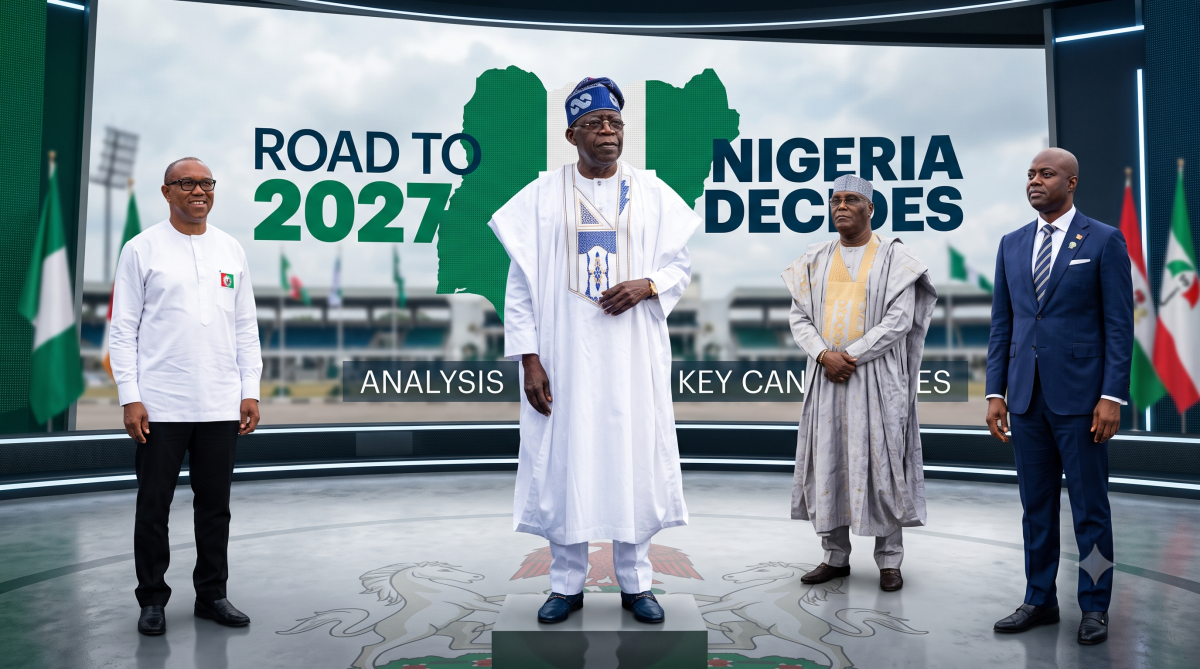
Nigeria is only weeks away from the formal beginning of campaigns for the 2027 general elections. From 19 August, political parties and their candidates will be legally permitted to take their messages to the public ahead of the presidential and National Assembly elections scheduled for 16 January 2027. The governorship and state assembly elections will follow on 6 February.The politics, however, began long before the official campaign calendar. Coalitions are being negotiated, politicians are changing parties, campaign structures are emerging, and supporters are already filling social media with competing claims about candidates and their records. The rallies may not have formally started, but the struggle to influence how Nigerians understand the election is already underway.What begins next month will therefore not be the beginning of political activity, but the point at which informal manoeuvring becomes an open national contest for power. Nigerians should use that moment to look beyond rallies, slogans and endorsements and begin examining the candidates, the coalitions behind them, the credibility of their promises and the information being used to influence voters. The election will be shaped as much by what citizens question as by what politicians say.Look Beyond the Candidates’ Public ImagesThe campaign will introduce Nigerians to carefully packaged versions of the people seeking office. Candidates will be presented as reformers, experienced administrators, defenders of the poor and leaders capable of rescuing the country. Their speeches, photographs and campaign videos will be designed to show strength, compassion and competence.But elections should not be decided by public relations alone. Nigerians should examine what each candidate did when previously entrusted with power, public money or institutional responsibility. Many of those asking to govern in 2027 have already served as governors, ministers, lawmakers, commissioners or heads of public institutions.A former governor promising fiscal responsibility should be asked about the debts, abandoned projects and unpaid obligations left behind in the state. A former minister promising reform should explain what changed in the ministry under his or her leadership. A serving official asking for another term should show what was achieved with the mandate already received.Campaigns often encourage societies to forget. Politicians who have spent years inside government may suddenly present themselves as outsiders who had nothing to do with the failures they now condemn. Nigerians should resist this reinvention and judge every candidate by the full public record.Watch the People Behind Each CandidateThe individual whose face appears on a campaign poster is only one part of the political structure seeking power. Behind every major candidate are financiers, party leaders, advisers, political contractors and regional power brokers who may expect something in return for their support. These interests may exercise enormous influence if the candidate eventually wins.Nigerians should therefore ask who is financing each campaign and who is making the important decisions behind the scenes. A candidate may speak about fighting corruption while depending on people whose public records raise serious questions. Another may promise independence while being tied to powerful interests that expect appointments, contracts or protection after the election.The quality of the campaign team also matters. The people appointed as spokespersons, advisers and policy coordinators may provide an early picture of how the candidate understands leadership. A campaign surrounded by competent and credible people is different from one built mainly around loyalists, praise singers and political enforcers.Running mates must also be examined beyond religion, ethnicity and geography. Nigerians should ask whether a vice-presidential or deputy governorship candidate has the competence, judgement and public experience required to assume greater responsibility. The position should not be treated merely as an instrument for balancing the ticket.Coalitions Must Be More Than Political ArithmeticCoalitions will be among the most discussed issues of the campaign. Opposition parties know that fragmentation can weaken their chances, while the ruling party will continue trying to expand its structure by attracting governors, lawmakers and influential politicians. Each side will present its alliances as evidence of growing national support.But the gathering of famous politicians does not automatically create a credible alternative. A coalition may bring together former governors, presidential candidates and party leaders without producing a shared vision of how the country should be governed. Nigerians must ask what holds the alliance together beyond the desire to defeat another candidate.Does the coalition have an agreed position on the economy, security, education, healthcare and constitutional reform? Can its members resolve disagreements without destroying the platform they are asking Nigerians to trust? Have they agreed on principles, or have they only negotiated positions and tickets?Coalition mathematics must also be treated with caution. Political analysts may add the votes received by different candidates in 2023 and claim that combining those candidates will automatically produce victory in 2027. But voters are citizens with changing interests, not electoral assets that politicians can transfer from one platform to another.Someone who voted for a candidate four years ago may reject that candidate’s new party, running mate or coalition arrangement. Another voter who opposed the person in 2023 may offer support in 2027 because circumstances have changed. Elections are determined by organisation, persuasion, turnout and trust, not simply by adding old figures together.Defections Do Not Always Represent Public SupportAs the campaign approaches, more politicians will move from one party to another. Each defection will be celebrated by the receiving party as evidence that the political tide is changing. Large ceremonies will be organised, and defectors will declare that they are responding to the wishes of their supporters.Nigerians should look beyond these statements. Some politicians change parties because of policy disagreements, but many move because they have lost control of party structures, fear losing nominations or believe the ruling party offers a safer route to victory. Others may be seeking access to power rather than pursuing any clear political idea.A governor or senator may defect with several local politicians, but ordinary voters do not always follow automatically. Citizens may support an individual without accepting the person’s new party, while others may remain loyal to the party and reject the defector. Political movements at the top should not be mistaken for settled decisions at the community level.The movement of too many politicians into one dominant party can also weaken democracy. When lawmakers and opposition leaders gradually join the government they are expected to challenge, public accountability becomes weaker. Nigerians should therefore ask not only who has defected, but what each movement means for genuine political competition.Promises Must Be Tested Against Practical PlansThe formal campaign will bring familiar promises. Candidates will promise jobs, security, affordable food, better electricity, stronger schools, improved hospitals and a more stable economy. Most of these promises will address real problems facing Nigerian families.The important question is not whether a promise sounds attractive. Nigerians should ask how it will be achieved, how much it will cost, who will implement it and when citizens should expect measurable results. A promise without a practical route to delivery is merely a campaign slogan.A candidate promising millions of jobs should identify the sectors expected to create them and the investment needed to support those sectors. Anyone promising to reduce inflation or strengthen the naira should explain the fiscal, monetary and production policies involved. Candidates should also explain the difficult choices their proposals may require instead of presenting every reform as painless.Security promises must also move beyond declarations that terrorism, kidnapping and banditry will be defeated. Candidates should explain what they would change in policing, intelligence gathering, border management, community protection and criminal prosecution. Nigerians deserve security plans with responsibilities, resources and measurable targets.Manifestos Should Become Tools of AccountabilityPolitical manifestos are often launched with speeches and media attention, only to disappear after the election. Many citizens never see the documents, while some candidates speak in general terms without publishing clear plans. This makes it difficult to measure performance after they enter office.The 2027 campaign should be different. Journalists, civil society organisations and citizens should preserve manifestos, speeches and major campaign promises. These commitments should later be compared with budgets, government policies and actual results.Candidates should be encouraged to state clear targets. Instead of promising to improve education, they should explain what will happen to enrolment, teacher recruitment, school infrastructure and learning outcomes. Instead of promising better healthcare, they should identify the facilities, personnel and funding required.Nigerians must also distinguish between promises that fall within the powers of the office being contested and those that do not. Presidential candidates should not claim they can single-handedly solve every problem controlled partly by states and local governments. Governorship candidates should not blame Abuja for failures in areas where states already possess authority and receive public funds.Incumbents Must Defend Their RecordsFor officeholders seeking another mandate, the campaign should be an examination of what they have already done. They will commission projects, publish statistics and argue that difficult reforms are beginning to produce results. Opposition parties will respond by pointing to hardship, insecurity, public debt and failures in service delivery.Nigerians should examine both arguments carefully. Government achievements should not be dismissed simply because they are being presented during an election period. But official claims should not be accepted without evidence merely because they come from ministries, governors or presidential spokespersons.Citizens should ask whether announced projects have been completed, how much they cost and who has benefited from them. They should compare government claims with the condition of roads, hospitals, schools and communities. Statistics are important, but they must help explain people’s lives rather than conceal their hardship.Opposition candidates must also offer more than criticism. Describing everything the government has done as a failure is not the same as presenting a workable alternative. A serious opposition should explain what it would retain, what it would reverse and how it would avoid creating new problems while addressing existing ones.Nigerians Should Follow the Campaign MoneyMajor political campaigns require enormous resources. Rallies, campaign offices, media advertisements, branded vehicles, private aircraft and networks of political organisers and influencers all require funding. The people providing that money may expect political or financial benefits if their candidate wins.Citizens should therefore pay attention to who appears to be financing the major campaigns. A wealthy individual or company may contribute money with the expectation of receiving contracts, licences, appointments or favourable policies. Campaign finance is not only an election issue; it can shape how a government operates after taking office.Nigerians should also watch how government resources are used. Official vehicles, government media platforms, public buildings, empowerment programmes and project commissioning events can easily become instruments of partisan campaigning. There must be a clear difference between communicating government activities and using public resources to promote a political party.Public officials have the right to explain their records and seek another mandate. But public funds belong to all citizens, including those supporting opposition parties. The fairness of the election will partly depend on whether this boundary is respected.Misinformation Will Not Always Look Like a LieThe information battle may become one of the most important parts of the 2027 campaign. Political messages will move through LekeeLekee accounts, WhatsApp groups, TikTok videos, Facebook pages, X accounts, online newspapers, radio programmes and networks of paid influencers. In many communities, information received through a trusted family or religious group may carry more influence than an official campaign statement.False information will not always appear completely fabricated. A genuine photograph may be given a false date, an old video may be presented as a new event, or a candidate’s statement may be shortened until its meaning changes. A claim can contain some truth while still leading voters towards a false conclusion.Artificial intelligence will make this harder. Nigerians should expect cloned voices, altered photographs, fake endorsements and videos designed to make candidates appear to say things they never said. The most dangerous material may be released shortly before voting, when journalists, electoral officials and fact-checkers have little time to respond.A false report about violence, a change in voting arrangements or the withdrawal of a candidate could reduce turnout in selected communities. Such information may spread quickly because it appeals to existing fears and political loyalties. Nigerians must therefore learn to pause before forwarding messages designed to produce immediate anger or panic.Political Influencers Must Be QuestionedDigital influencers will become important campaign structures. Some will explain policies, examine records and help younger voters understand complex political issues. Others will work as paid campaign operatives while continuing to present their messages as independent personal opinions.Citizens should watch for identical phrases, allegations and hashtags suddenly appearing across many accounts. They should question influencers who defend every action of one candidate while condemning similar conduct by an opponent. Coordination does not automatically make a claim false, but voters deserve to know when political communication is sponsored.Popularity must not be confused with credibility. A person with millions of followers can spread false information, while a small local platform may publish evidence that deserves national attention. The strength of a claim should come from the evidence supporting it, not the fame of the person making it.The traditional media must also protect its independence. Interviews should test campaign claims rather than provide candidates with uninterrupted publicity. Journalists should ask difficult questions of the candidates they admire as firmly as they question those they oppose.Ethnicity and Religion Will ReturnWhen records become difficult to defend, politicians often turn to identity. They tell communities that the election is about protecting a religion, defending a region or preventing another ethnic group from gaining power. This turns a contest over governance into a struggle based on fear.These messages may not always come directly from the candidates. Supporters, religious figures, informal groups and online influencers may be used to spread them. A politician may preach national unity on television while campaign surrogates deliver divisive messages to smaller audiences.Campaign speeches delivered in Hausa, Yoruba, Igbo, Pidgin and other Nigerian languages must receive the same scrutiny as speeches delivered in English. National accountability should not end where translation begins. What candidates say to local audiences may reveal more than what they say at formal national events.Nigerians should reject the idea that questioning a politician from their community amounts to betrayal. Corruption does not become acceptable because the person involved shares the voter’s religion or ethnicity. Poor leadership does not become good leadership because it comes from the voter’s region.Rallies Are Not the Same as VotesParties will present large rallies as proof that victory is certain. Campaign organisations will publish aerial photographs, videos of crowded stadiums and claims that entire states have endorsed their candidates. These images may demonstrate organisation, but they do not always reflect how people will vote.Some citizens attend rallies because they genuinely support the candidate. Others attend because transport, food or money has been provided, while some are simply curious to see a major political figure. Crowd size should therefore not be treated as a scientific measure of electoral support.The same caution should apply to social media trends. A candidate may dominate one platform because supporters are highly organised there while remaining weak among voters who rarely use that platform. Elections are won through registered voters, local structures, turnout and lawful votes, not hashtags alone.Opinion polls should also be examined carefully. Nigerians should ask who paid for the survey, how respondents were selected and whether the sample represents the country’s regions and social groups. An online poll conducted among followers of a political account cannot represent the opinion of the entire country.Electoral Institutions Must Also Be WatchedCandidates will receive most of the attention, but the credibility of the election will depend heavily on institutions. Nigerians should follow the condition of the voters’ register, the distribution of electoral materials, accreditation procedures, result management and the treatment of political parties. Many decisions taken before election day can shape what eventually happens at the polling units.INEC must communicate clearly and quickly throughout the process. Delayed or confusing information creates space for rumours, partisan interpretations and deliberate misinformation. Electoral procedures must be explained in language ordinary voters can understand.Security agencies must also act impartially. All parties should be allowed to hold lawful rallies without facing selective restrictions or intimidation. Security officials should protect voters and candidates rather than becoming instruments in the political contest.Political parties also have responsibilities. They should educate their supporters, discourage violence and avoid declaring results before the authorised electoral body. A credible election requires responsible conduct from institutions, candidates and citizens.Governance Must Not Stop Because Campaigns Have StartedThe formal campaign may tempt public officials to abandon governance for politics. Ministers, governors and lawmakers may spend increasing amounts of time managing rallies, defections and campaign structures. Difficult decisions may be postponed, while public projects may be rushed for commissioning because they offer electoral advantage.Nigeria cannot suspend government until the election is over. Citizens will continue to need security, schools, hospitals, electricity, roads and economic relief throughout the campaign period. Those seeking another mandate must continue performing the jobs for which they are already being paid.Opposition politicians must also remain responsible. They should not reject every government initiative merely because acknowledging progress might benefit the ruling party. A useful policy remains useful regardless of which party introduced it, just as failure remains failure regardless of who is defending it.The Responsibility of Nigerian VotersFrom 19 August, Nigerians will hear months of speeches, promises, accusations and endorsements. Political parties will spend enormous resources trying to tell citizens what to remember and what to forget. Every campaign will attempt to present the election as a simple choice in which only one side represents hope.The responsibility of voters is to resist that simplification. Nigerians must compare promises with records, examine the interests behind coalitions, follow campaign money and verify political information before sharing it. They must ask whether the people seeking power have shown the competence, judgement and character required to exercise it.The election should not be decided by the loudest online army, the largest rally or the highest number of defecting politicians. It should be decided by a careful assessment of how candidates have previously used power, what they intend to do with it and whose interests they are likely to serve. That assessment must begin before campaign slogans become too loud for difficult questions to be heard.Campaigns are designed to control attention. Democracy requires citizens to look beyond what politicians want them to see. As the 2027 campaign season begins next month, that may be the most important responsibility facing every Nigerian voter.